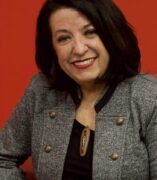
Teresa Córdova
Community Engagement Award - Awardee (2025)
Director, Great Cities Institute
About
Dr. Teresa Córdova is the Director of the Great Cities Institute (GCI) at the University of Illinois Chicago and a Professor of Urban Planning and Policy in the College of Urban Planning and Public Affairs. An applied theorist, political economist, and community-based planner, Dr. Córdova advances a “scholarship of engagement” that integrates research, teaching, and public service to address urban inequality and promote equitable development.
Her research focuses on the effects of global economic restructuring on local communities, exploring how neighborhood revitalization, workforce development, and industrial policy can foster inclusive economic growth. Through her leadership at the Great Cities Institute, she has guided influential research on youth joblessness, manufacturing, and urban disinvestment. Her work has shaped policy conversations at city, county, and state levels.
Dr. Córdova has served in numerous civic and advisory roles, including Chair of the Chicago Plan Commission (2019–2022) and member of the Cook County Economic Development Advisory Committee, and board member of the Grand Victoria Foundation and Illinois Humanities. She has advised the City of Chicago, Cook County, and the State of Illinois on strategies for economic opportunity, infrastructure investment, and equitable growth, and recently served on Mayor Brandon Johnson’s Transition Subcommittee on Economic Vitality and Equity.
A prolific scholar and speaker, Dr. Córdova’s publications span urban and regional planning, Latino studies, and community development, addressing topics such as environmental justice, neighborhood change, and participatory planning. Her leadership at GCI emphasizes collaboration between universities and communities to develop actionable research and practical solutions that strengthen neighborhoods without displacing long-time residents.
Throughout her distinguished career, Dr. Córdova has been recognized for bridging theory and practice, mentoring students and practitioners, informing public policy, and championing investments that build more just and resilient cities.